HIDDEN: Bauder Dachplaner
Introduction / Overview
Bauder is a family-owned company from Germany and one of Europe’s leading providers of advanced roofing solutions. For over 165 years, Bauder has been developing and manufacturing high-performance systems for waterproofing, thermal insulation, green roofs, and photovoltaics. With more than 1,500 employees, seven production sites in Germany, one in Austria, and subsidiaries in 18 countries, Bauder maintains a strong presence across Europe and continues to set standards in sustainable and future-oriented roofing.
About the project: "Bauder Roof Planner"
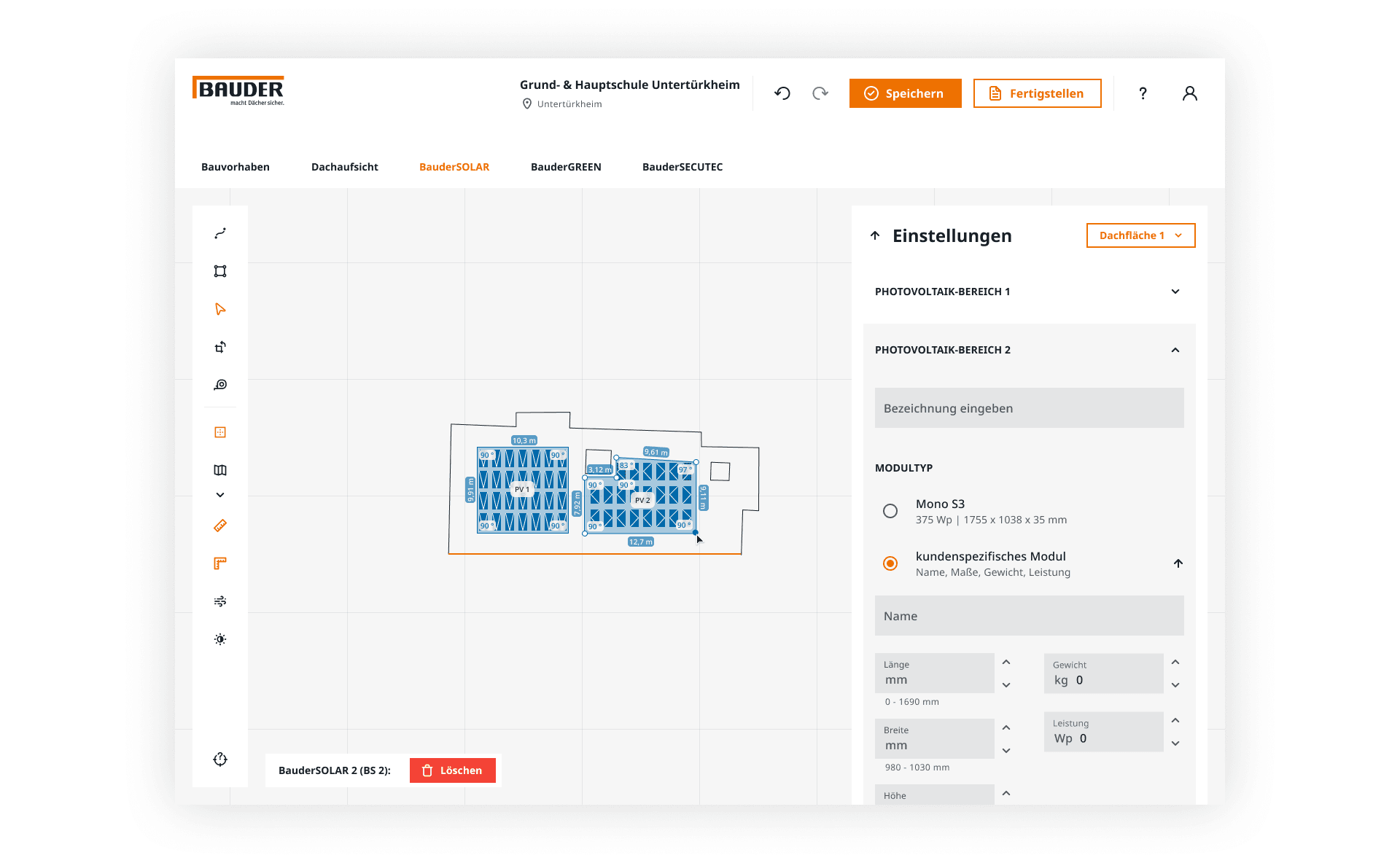
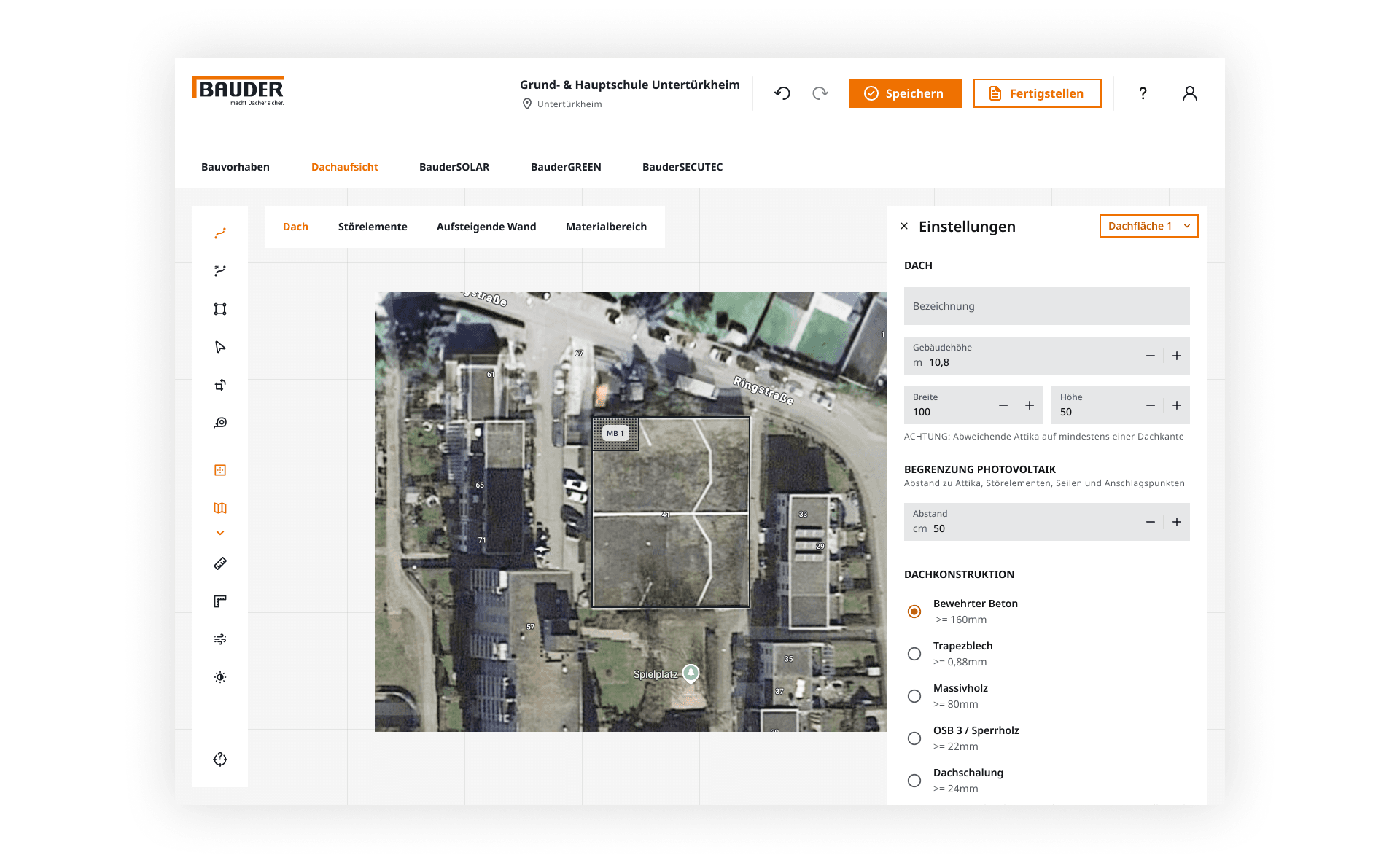
Bauder offers a wide range of premium roofing products – almost all of which require careful planning, including part selection, weight calculations, and wind suction assessments.
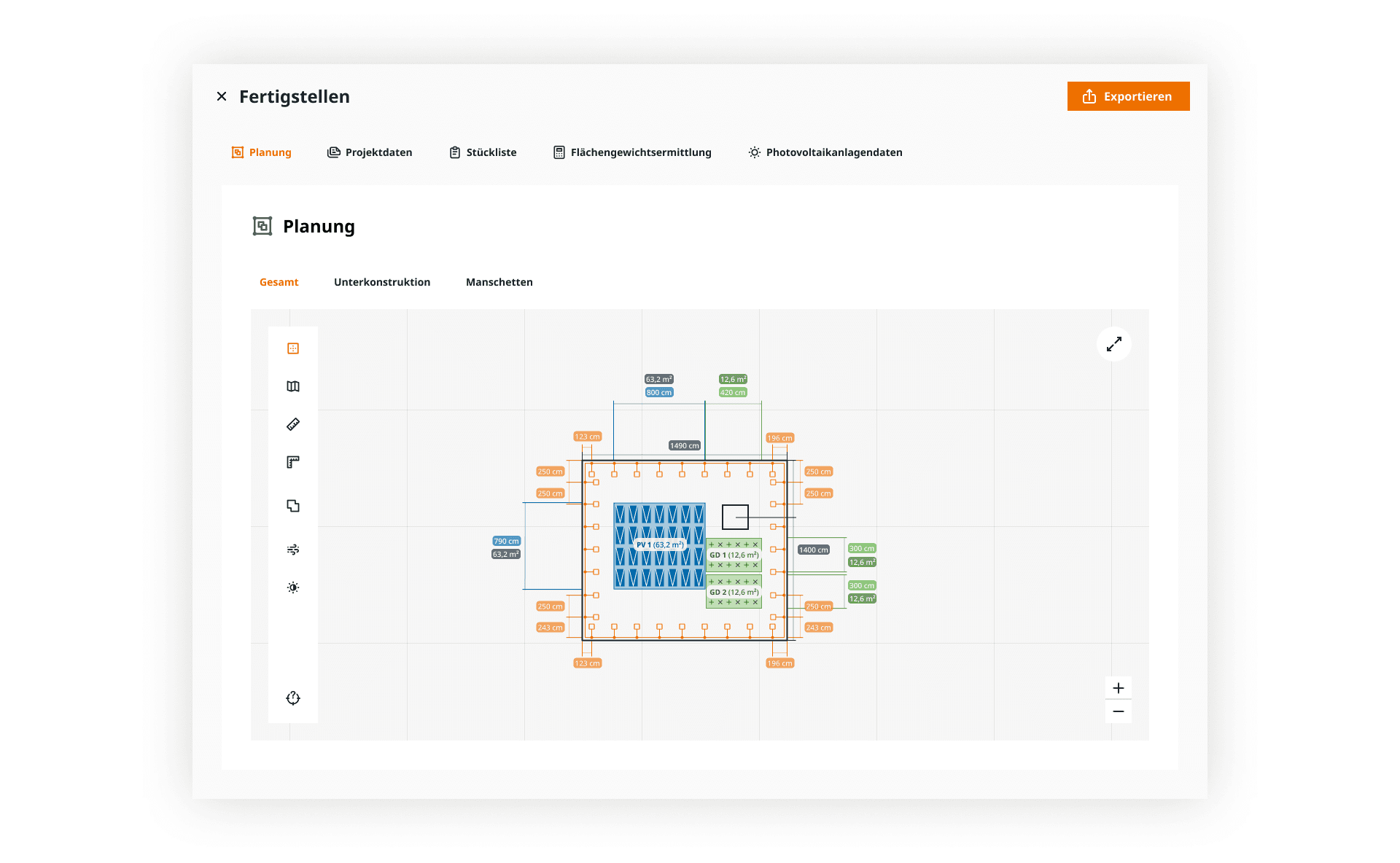
To meet individual customer needs, Bauder service technicians create tailored plans and provide detailed parts lists along with supplemental calculations such as total weight. This free planning service reflects Bauder’s longstanding commitment to delivering not only outstanding products but also a high-quality service experience. The company is not afraid to invest in digital innovation to support this goal.
That’s why, in 2021, Bauder launched the development of its digital planning tool – the Bauder Roof Planner.
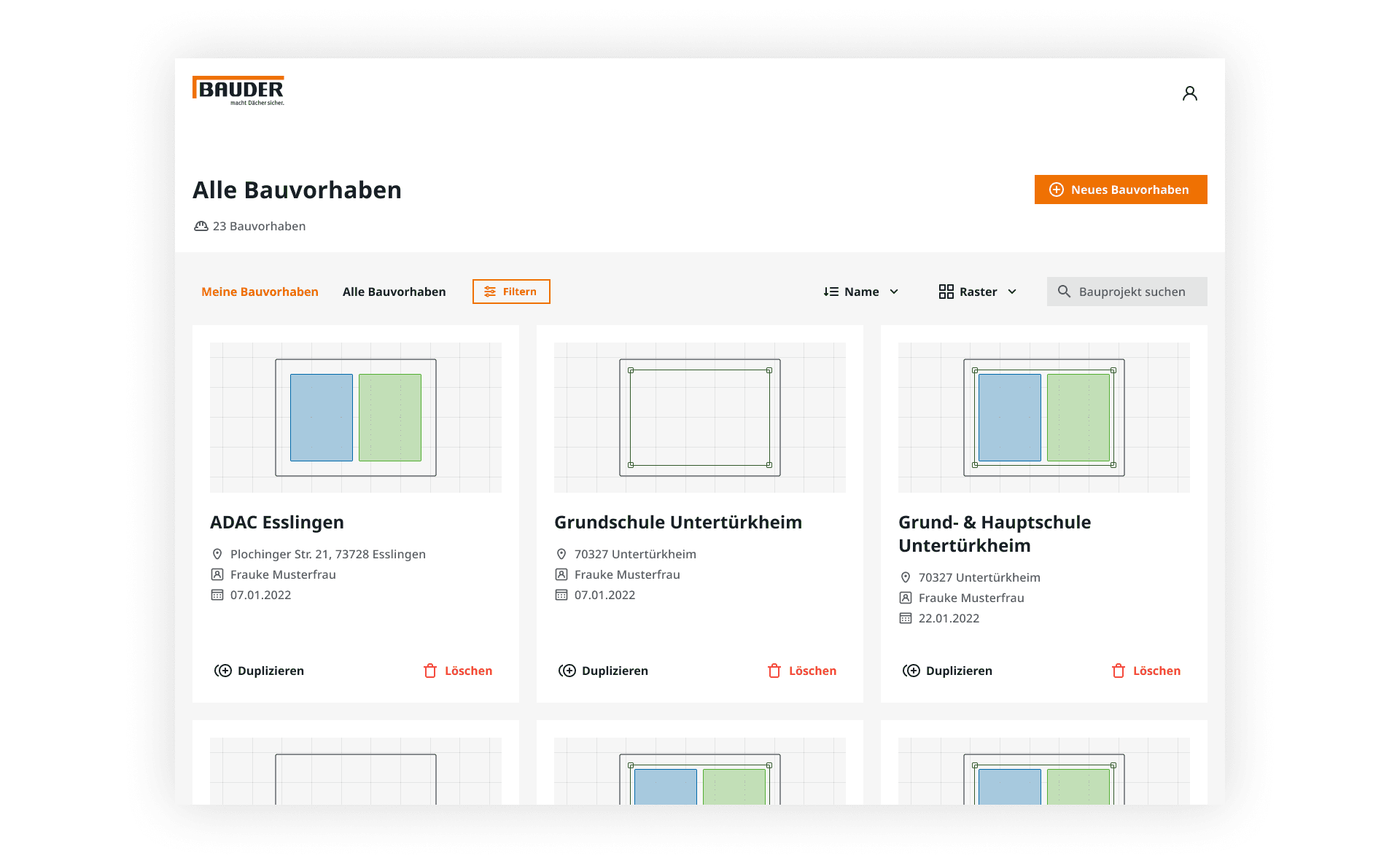
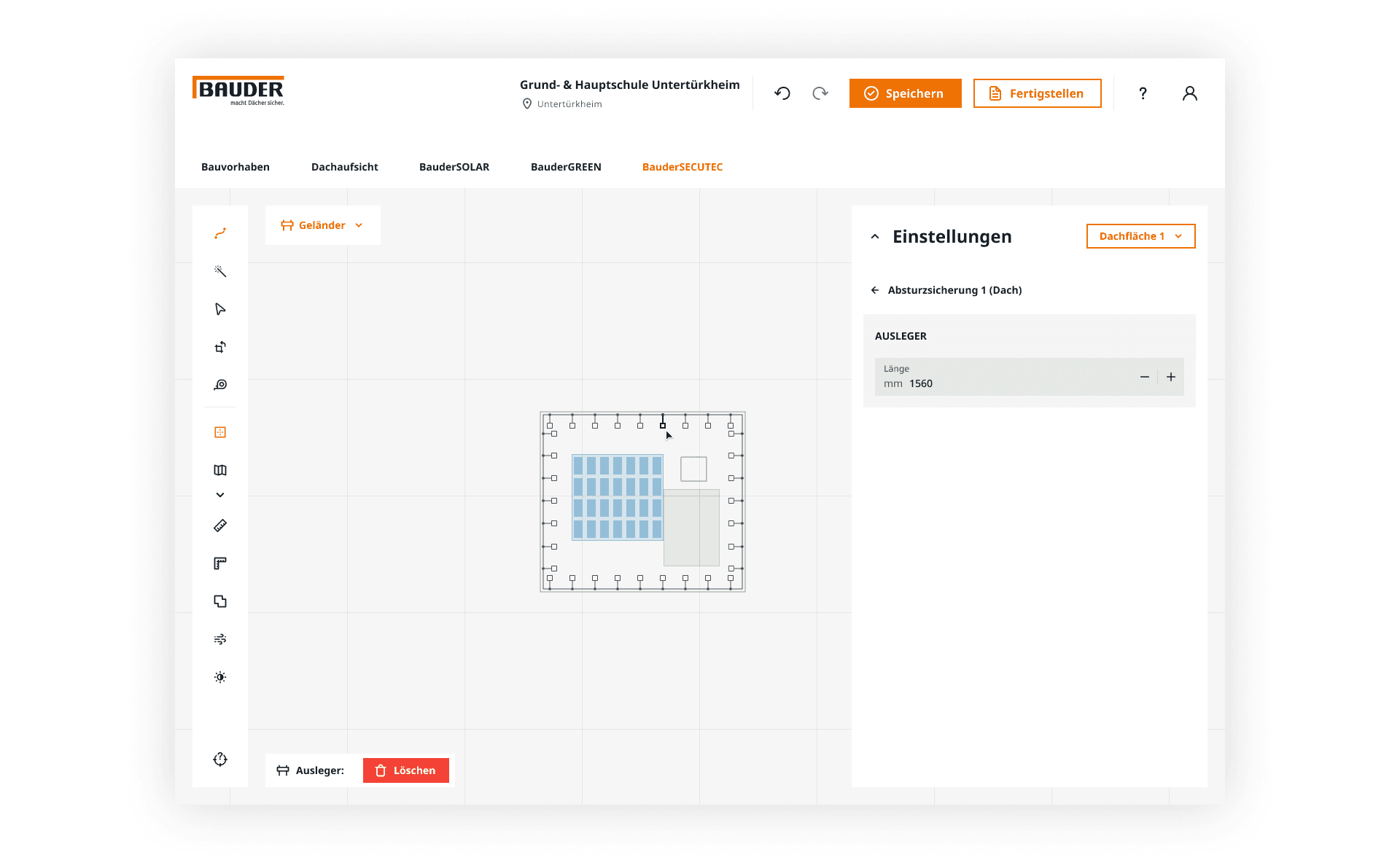
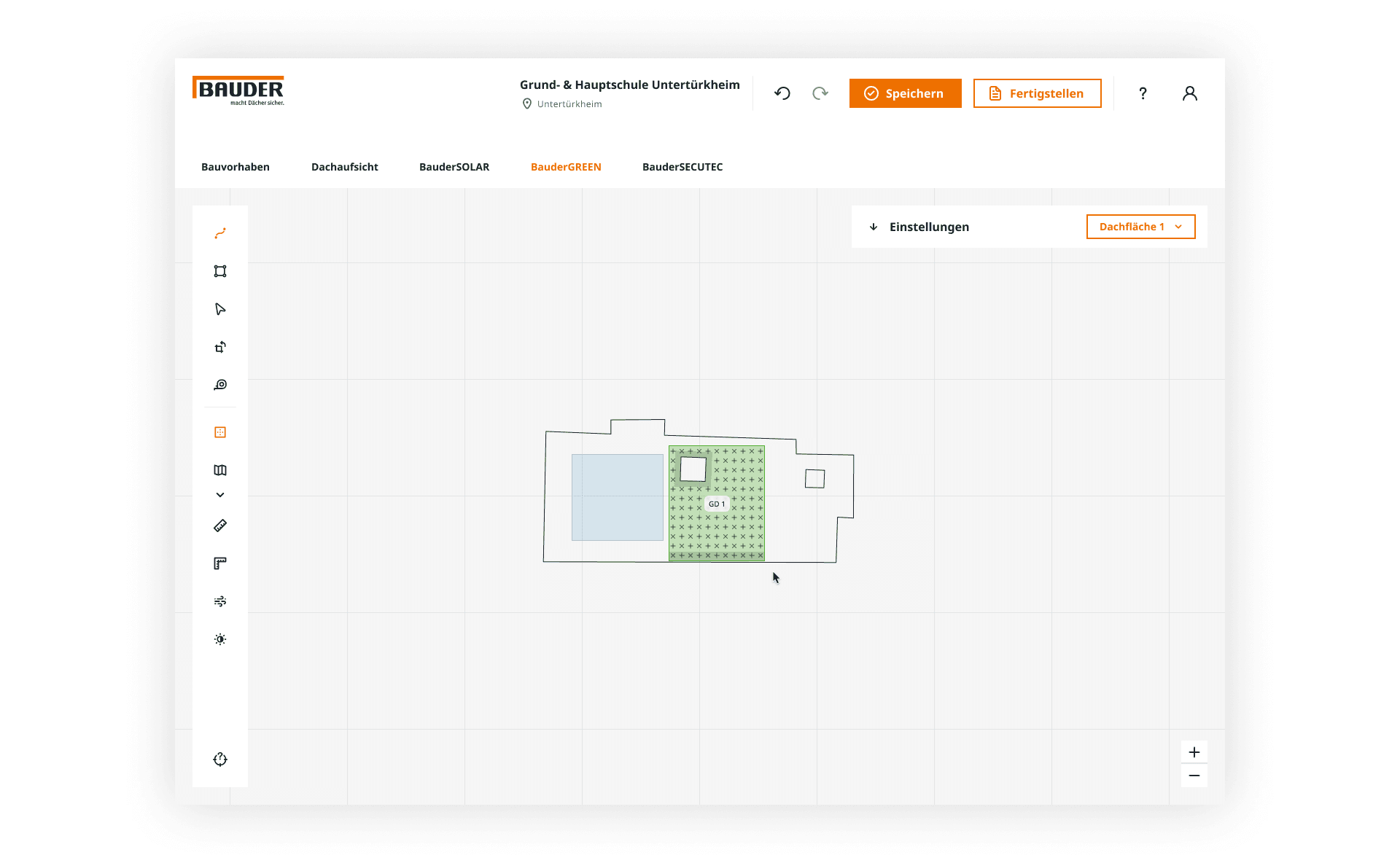
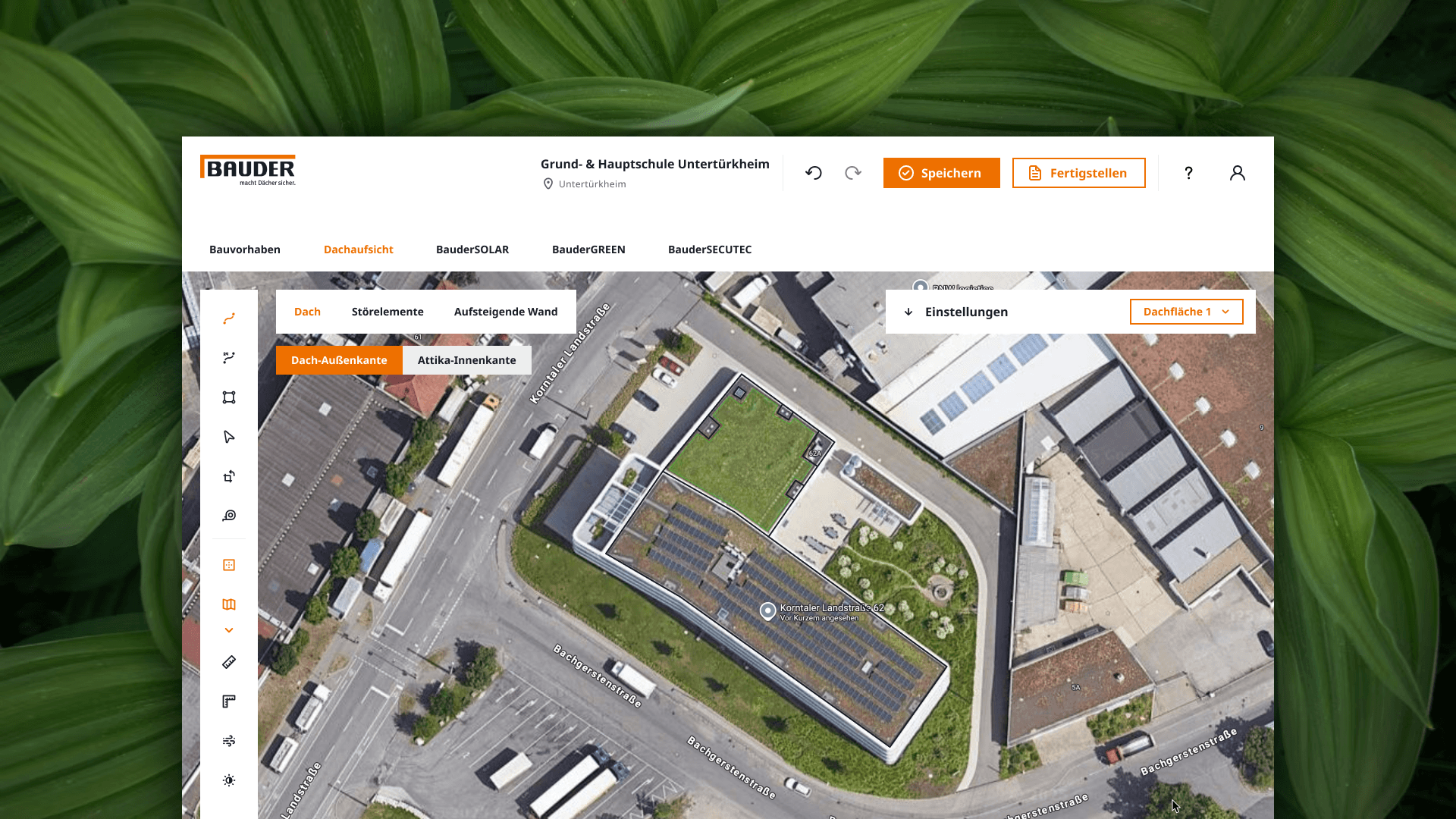
The objective: to provide the best possible service experience for customers, while making the planning process easier and more efficient for employees. Previously, Bauder’s technicians had to work with a range of disconnected tools. The Roof Planner was designed to unify all relevant functions in one tool and integrate seamlessly into the existing CRM system and workflows.
Project start
Following a kind recommendation, one of Bauder’s company’s owners and managing directors contacted me to support the UX design of the Roof Planner – and, later, other digital products as well.
When I joined the project, the external development partner and the Head of Digital Products at Bauder had already conducted user interviews, stakeholder workshops, and created mockups for an MVP.
In close collaboration with the Head of Digital Products, I focused initially on building a deep understanding of the existing user needs and iterating on the MVP mockups to improve usability and product-market fit.
Project development and my role over time
The project scaled rapidly. After releasing the first MVP, we continually added new features, fixed bugs, and reduced technical debt.
What stood out was the high development velocity: working in two-week sprints, we aimed to deliver noticeable improvements with every release – either by introducing new features or refining existing ones.
Although I occasionally wished for more time to dive deeper into user research, the fast feedback cycles helped us quickly validate our ideas. We stayed in close contact with a group of key users, who gave regular feedback and helped ensure the product evolved to meet their needs.
My responsibilities included:
- Understanding the context of use
- Defining product requirements together with the Product Owner
- Creating concepts and mockups based on user needs
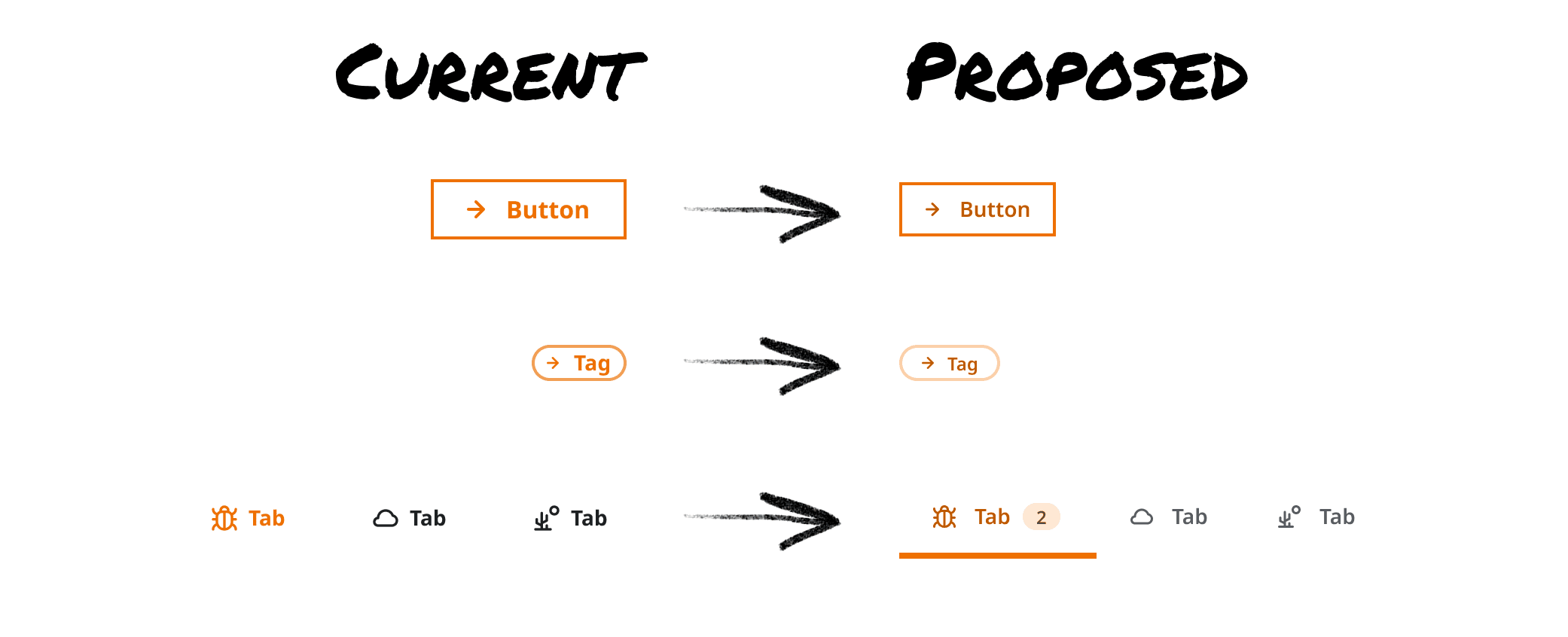
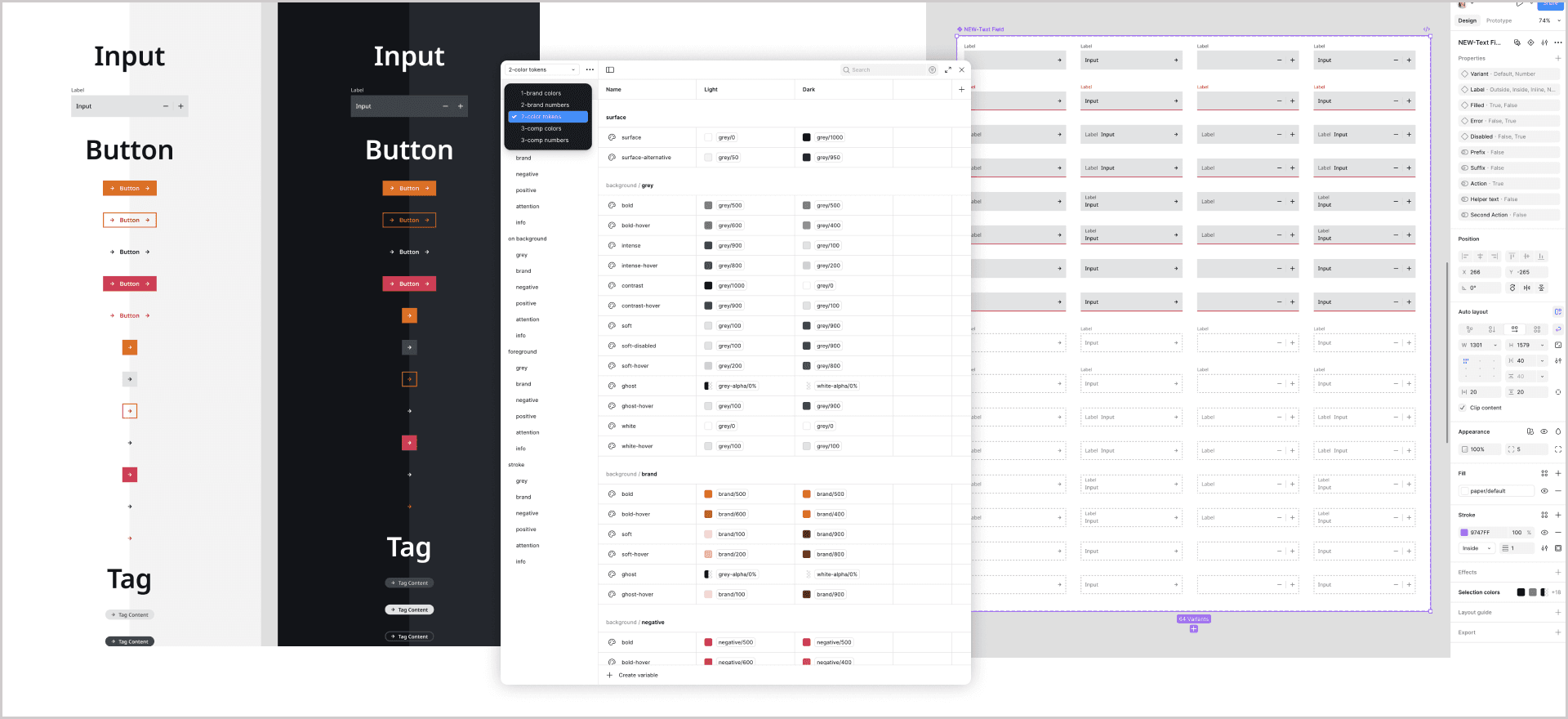
- Creating a Design System according to the Bauder CI and based on MUI (Material UI)
- Collaborating with developers to ensure feasibility
- Testing and evaluating usability
- Participating in all Scrum events early on (later focusing on refinements and reviews as my role expanded across projects)
What makes this project special?
Several aspects make this project particularly interesting from a UX perspective:
1. Complexity of a visual planning tool
Designing a visual planning tool is inherently complex. Users need to carry out a wide range of interactions – and these must be as intuitive and self-explanatory as possible. Achieving this required a deep understanding of existing tools, workflows, and user expectations.
2. User acceptance
Our users had established workflows they were confident in. Replacing those with a new tool carried risks, especially given that the MVP would naturally have some limitations. We had to balance the desire for innovation with the need for continuity and trust.
3. High development velocity
The speed at which we worked made the project exciting but also demanding. We had to align user understanding, product strategy, design, and validation within short timeframes – requiring tight collaboration and clear prioritization.
4. UX in a Scrum environment
Like many product teams, we faced the classic challenge of integrating UX work into Scrum. Development benefits from clearly defined requirements. To provide those (and more) UX design needs to start before implementation planning. To manage this, I was in constant close contact with the PO but also included in as many Scrum events as possible, aligning my work closely with the team’s rhythm and planning cycles.
5. Branding challenges for digital products
Bauder has a strong visual identity – but it wasn’t defined for digital applications yet. So in our digital product team, we had room to explore how Bauder software should look and feel. However, challenges such as insufficient contrast (from an accessibility perspective) required negotiation. While I prepared and developed accessible alternatives, we continue to work on aligning these with the overall corporate identity. This is an ongoing process.
6. Design system foundations
With the first digital products came the need for a design system. Together with the external development partner, we chose to build on Material UI (MUI) – a React component library that allowed us to create a high-quality product quickly. While this saved time, it also meant limited flexibility in component and style architecture. Like many teams, we faced the ongoing challenge of staying up to date with evolving design tools and standards (e.g. variables in Figma).
Conclusion
The Bauder Roof Planner project shows how a traditional, hardware-based company can successfully extend its value proposition through digital services – without compromising on quality or user focus. By combining agile development, cross-functional collaboration, and thoughtful UX design, we created a tool that supports both internal efficiency and outstanding customer experience.
The entire team – both external and internal – did an outstanding job, which led to the rapid growth of Bauder’s digital department and product portfolio. Eventually, Bauder began filling more key digital roles in-house, including building an internal UX team. This naturally marked the conclusion of our collaboration.
I am truly proud of what we built together and of the journey we shared. I wish Bauder continued success as they further develop their impressive digital products.